

There are two menin inhibitors broadly available to patients with acute myeloid leukemia (AML): ziftomenib made by Kura Oncology ($KURA) and revumenib made by Syndax Pharmaceuticals ($SNDX). Which drug is better?
TL;DR small differences compound to give majority share to Kura over time because of modestly better safety profile, tolerability for patients, less drug-drug interactions, and more convenient dosing. This matters in combination therapies that define frontline and eventually later line therapies. Signs of this will emerge over next 1-2 years from earnings reports from Kura and Syndax on sales, new starts, and patient retention; results in combination trials.
Small Differences Can Matter When Patients Have Multiple Choices
Functionally, both drugs do the same thing - they enter the cell, bind menin, prevent downstream gene transcription of key leukemia pathways, and force differentiation of the immature cancer cells into mature cells. This post will not dive into the biochemical differences between zifto and revu.
There are 2 more menin drugs in the pipeline that can reach patients in a reasonably decent time from now and therefore worth considering - enzomenib and bleximinib. Borrowing from Pharmagellan’s thoughts in Biotech Forecasting and Valuation, we can perhaps model steady state patient share in a 2-drug and 4-drug market where there is no differentiation except in order of entrance into the market. Here is some numbers from LEK:
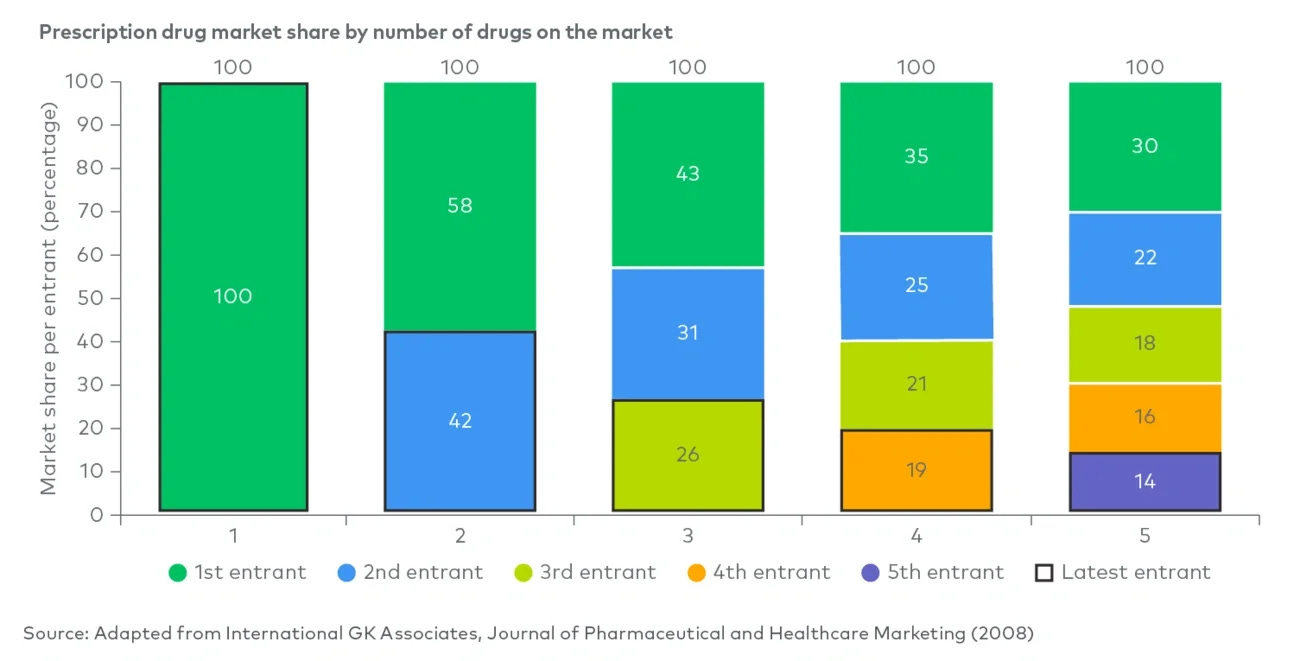
The specific numbers of 35-25-21-19 or 40-20-21-19 in a 4-drug market are not important to us in this exercise because they only slightly change the net present value numbers. We are ways away from a 4-drug market. Even modest sources of differentiation between two drugs in the same class that do the same thing can make a big difference. Here’s an infographic from LEK describing this
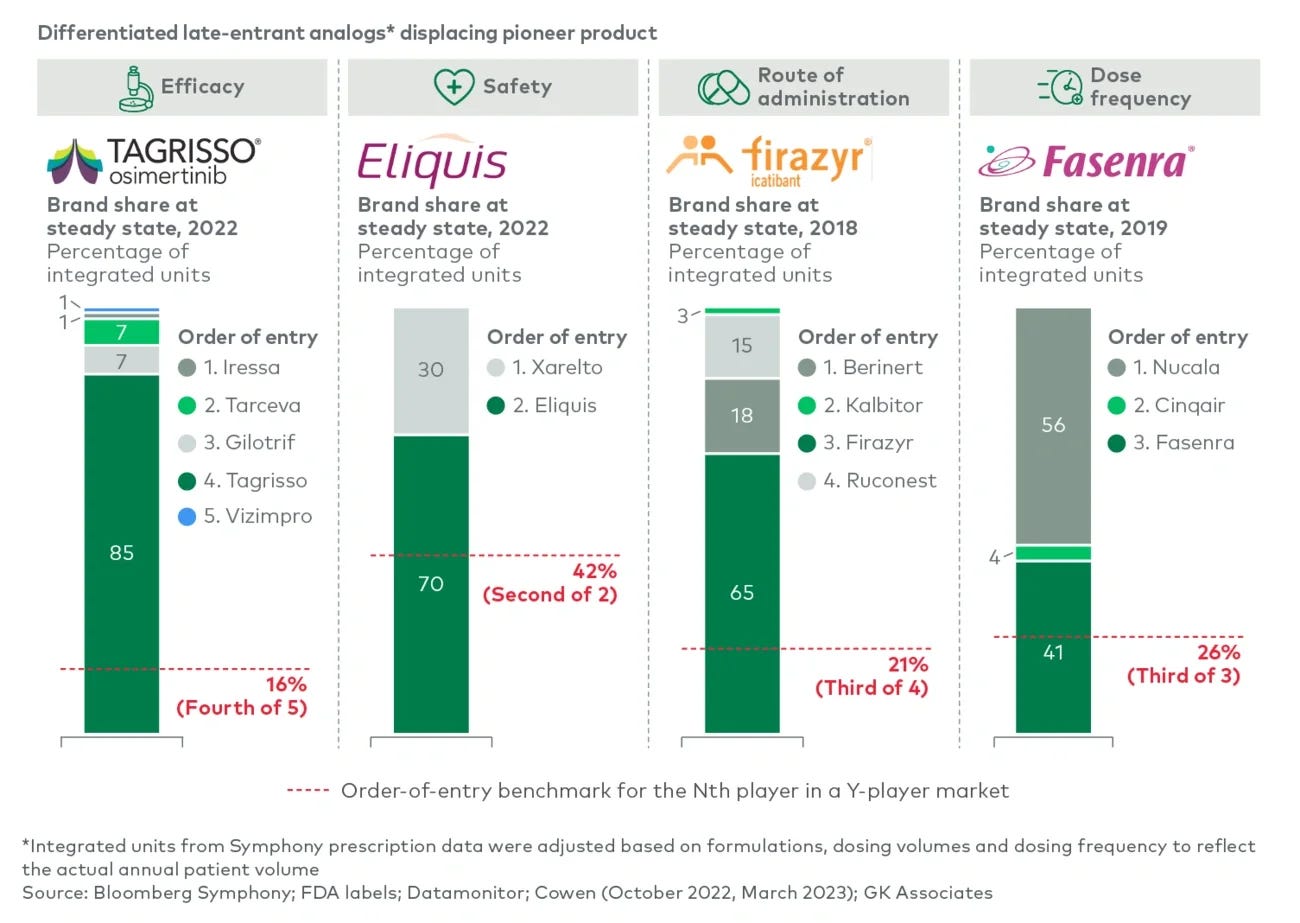
(I have no special affinity to LEK, it was just the first thing that came up when I was google’ing for an image to make my point.) Here, we will only consider the head-to-head between ziftomenib (zifto) and revumenib (revu).
Revumenib Label Highlights Greater Warnings, More Complex Dosing Considerations, and Higher Patient Burden
The current FDA label for revumenib is for relapsed/refractory (R/R) KMT2A rearrangement (KMT2A-r) or NPM1 mutation (NPM1m) AML pediatric and adult patients with whereas ziftomenib is for adults with NPM1m R/R AML. Pediatric NPM1m and adult and pediatric KMT2A-r currently only for revumenib.
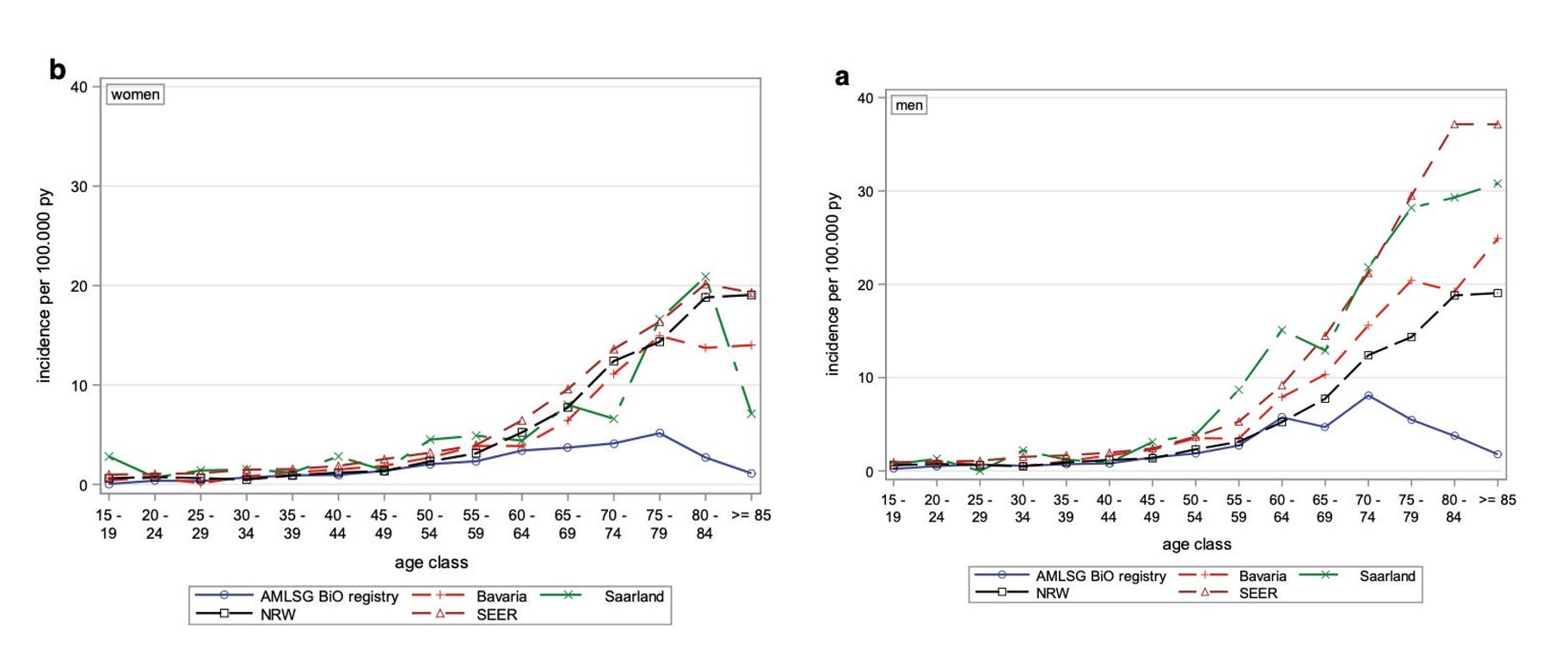
Though, given that pediatric cases and specifically R/R pediatric cases pale in comparison to their adult counterparts, the pediatric label from a market share or valuation perspective is not that relevant (though I do appreciate that Syndax has made their therapy available to children). KMT2A-r occurs in ~4% of newly diagnosed AML and given that this alteration has a propensity for producing R/R disease, the additional adult R/R KMT2A-r label offers Syndax a slightly larger population at present.
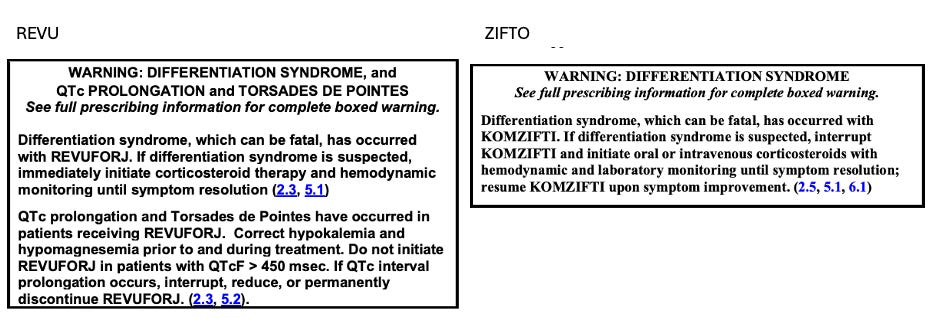
The FDA label for revu has a black box warning for differentiation syndrome and QTc prolongation and Torsades (zifto only has differentiation syndrome and a precaution for QTc).
It is also much easier to dose zifto. It is 600 mg once daily taken as 3 200mg pills on an empty stomach and don’t take it with proton pump inhibitors. Try not to take it with H2 receptor antagonist (used in GERD, urticaria, and peptic ulcer disease) but if you must, then take zifto 2 hours prior to H2.
Now, let’s look at revu. Dose of revu is twice daily and the actual dose varies with weight. To be fair, most patients not pediatric will be > 40 kg, so there is only two dose levels which are conditional on CYP3A4 status. But, providers have to actively check weight when dosing and monitor and adjust as a patient’s weight switches between categories.

Concomitant use of a strong CYP3A4 inhibitor (azole antifungals, macrolide antibiotics, HIV protease inhibitors, HCV protease inhibitors) is not an ultra-rare thing in this patient population. Patients with infections and on infection prophylaxis, especially AML patients with less immune reserve end up on some of these CYP3A4 medications. CYP3A4 inhibitors slow revu metabolism increasing the risk of side effects like Torsades and electrolyte derangements (e..g, hypokalemia). Though not labelled, individuals on moderate CYP3A4 inhibitors (e.g., diltiazem and verapimil) may have some pause and just prefer to be on a drug that does not have that risk.
Next, revu must be taken fasted or with a low-fat meal each time (so twice a day). And, the tablets come in three different dosages.
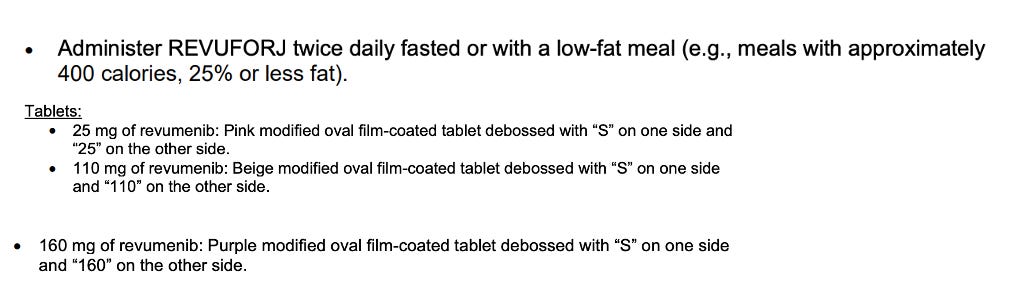
So, someone on 270mg would take the 110 and 160 pills every 12 hours. If on the 160 (aka on a strong CYP3A), its a single pill every 12 hours.
From the patient perspective, pill burden and regimen complexity add up. Consider that leukemia patients are typically asked to take anywhere from 5-10 medications and that does not consider the frequency and route. Secondly, twice a day is harder than once a day and missed doses will lead to subpar efficacy.
Zifto is just a simpler sell to patients and providers.
Zifto likely edges out Revu in frontline settings
Moving beyond the current indication, both Kura and Syndax are trialing first-line and combination therapies. These areas are substantially larger than the current R/R NPM1 adult indication.
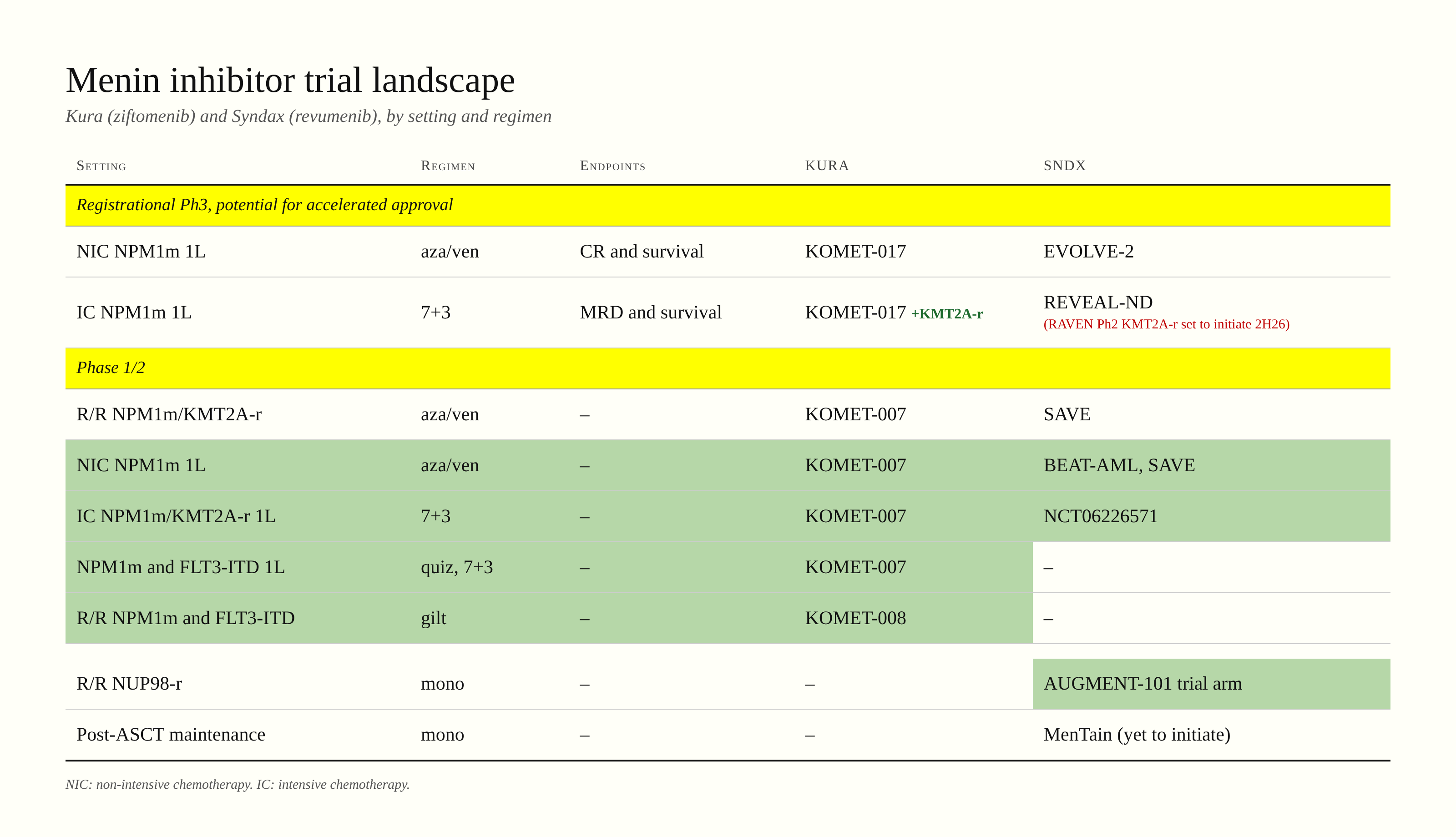
Heading into the end of 2026 (currently it’s 10/31), the green highlights are places where management has guided to additional data. In intensive chemo, Kura has the KMT2A-r population enrolling too whereas Syndax is just getting started initiating the trial1. Kura across trials has generally larger patient sizes and/or more mature data. We will get a better line of sight into the NIC and IC space in the next 2 months, as well as the possibility that zifto delivers value in FLT3-ITD co-mutated disease.
Execution wise the initial MRD / CR Phase 3 readouts will likely edge in favor of Kura who have committed to 2028 for the intensive chemo (IC) but have not committed to anything for the non-intensive chemo (NIC). Syndax has not released timelines for their topline readout in their Phase 3 frontline programs. Combinations with toxic drugs like aza/ven and 7+3 are where differences in safety not previously recognized (in monotherapy given at later disease stages) become important.
It is also my opinion that from listening to both management’s calls, there is a greater emphasis placed on commercial execution for Kura. This emphasis is just what is transmitted externally, and it may be possible that internally the situation is different. Both companies report 3Q earnings very soon, like within the week from when I’m writing this on Halloween 2026.
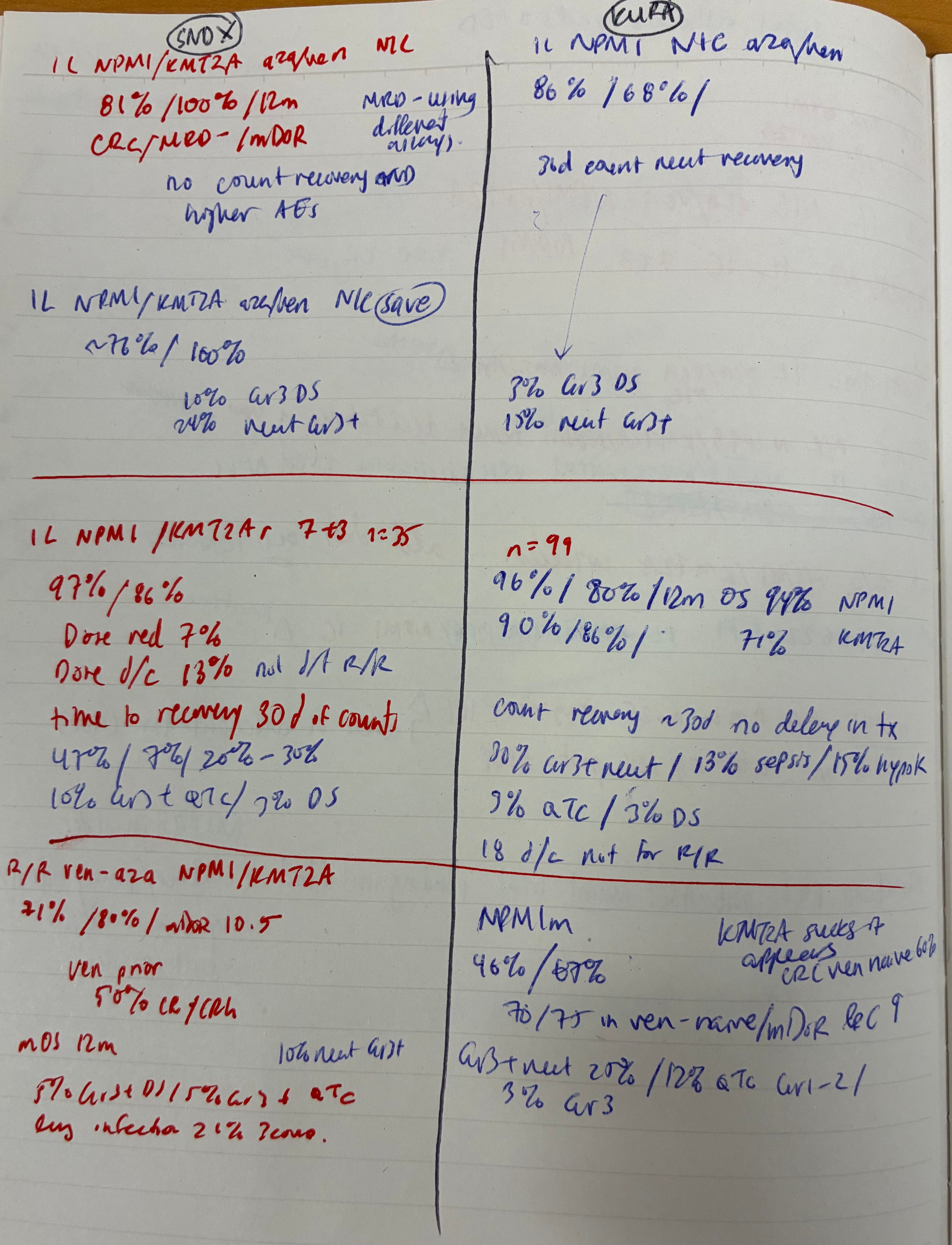
In the data available to us, there is a trend to lower grade 3 differentiation syndrome, grade 3+ neutropenia, grade 3+ QTc prolongation, and dose reductions/interruptions/discontinuations with ziftomenib in frontline settings. (It may be useful to prompt your favorite AI to get a flavor for the cross-trial2 comparisons given the notebook scribble I’ve posted here3).
Closing Thoughts
I want to comment briefly on the commercialization of each drug. Syndax commercializes revu itself with some royalties / milstones it must pay out4. Kura splits profit-losses 50-50 with Kyowa Kiwin and gets tiered double digit royalites ex-US. Kura funds activities “planned to be conducted prior to the end of 2028” per their agreement with Kyowa. And Kura management says they have enough cash till 20285.
Lastly, Syndax has basically nothing else in their clinical portfolio at the moment. Kura has darlifanib (farnysltransferase inhibitor) which may be of some use in KRAS G12C mutated solid tumors and renal cell carcinoma but yet to be proven in any way6.
In R/R KMT2A-r setting, zifto yielded four fatal differentiation syndrome cases in KOMET-001 among 39 patients.
Cross-trial comparisons come with many issues. Nevertheless, we will do them here because it is relevant and gives us “concepts of a plan” on how to evaluate one drug against the other
I’m in a rush at the moment and I’ve been trying to be more disciplined with how much time I spend on blog posts. To that end, I have seen other writers keeping timers and forcing themselves to finish the post in the allotted time. So, that’s what I’ve done for this post and hence the picture of the notebook.
Syndax has to pay out low double digit royalties and ~150M in milestone payments but otherwise it is theirs
“KURA anticipates cash sufficient to fund through first pivotal Ph3 KOMET-017 anticipated in 2028”
KOMET-015 from Kura expected to read out 2H28 is looking at imatinib plus ziftomenib in advanced gastrointestinal stromal tumors with KIT mutations previously progressed on imatiniImatinib is at least a moderate CYP3A4 inhibitor which means Syndax won’t pursue such a combination. That said the landscape in imatinib-resistant GIST has changed materially after Cogent showed incredible results in 4Q25 (which was a few months after Kura initiated this trial). I do not think zifto will be able to add value here to patients but maybe I’m wrong.